- Abraham Lincoln
Go Goa Gone
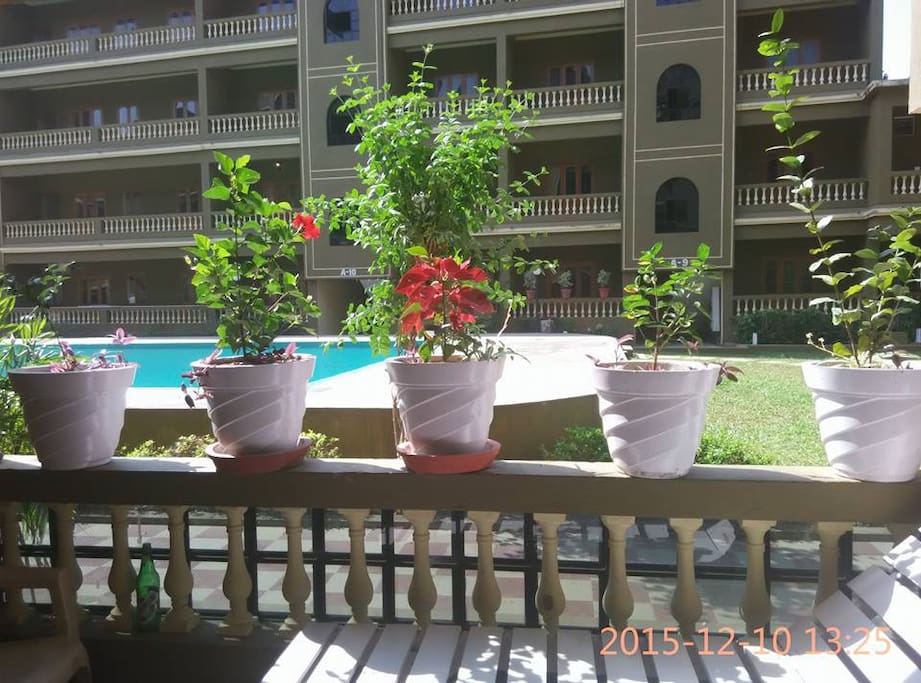
Poolside 1 BHK Apartment in Resort
Siolim, Goa, India
Serene Siolim- Gateway to the pristine beaches of North Goa at Tropical Dreams Resort with Lush green surroundings Ground Floor across the biggest swimming pool in Goa is furnished with SplitAC Ref...Vacation Rentals in Siolim
Friday, June 18, 2010
...says Abraham Lincoln on friendship
"If friendship is your weakest point then you are the strongest person in the world"
- Abraham Lincoln
- Abraham Lincoln

Kazakh proverbs: Folklore of Kazakhstan
Kazakh proverbs: Folklore of Kazakhstan
- Motherland is the mother to people; people is the mother to a dzhigit (skilful horseman).
- There is no place like your Motherland.
- The best people are in your motherland.
- Love to the Motherland starts in the family.
- The Motherland can get you warm better than fire.
- There is a lot of gold in some places, but still the Motherland is dearer than gold.
- An onion can be as sweet as honey if it grows in your Motherland.
- Even a mole feels strong when it is in his hole.
- If your sickle is sharp you wil I have a rich crop, if your Motherland is strong you will be as strong as your enemy.
- As small as sparrow is, it still protects its nest.
- A goose misses its lake, a man longs for his Motherland.
- You must have not gone too far if you were able to find your way back.
- Even air in your land can cure.
- Native land is a paradise for everybody.
- To betray the Motherland is as bad as to bury yourself alive.
- A man cries over the loss of his wife until she is buried, a man cries over the loss of his Motherland until he is buried.
- Afield looks lonely if it has not been sowed and a dzhigit looks lonely if he does not have a Motherland.
- Days and nights are beautiful in your Motherland.
- Any land is good but the Motherland is the best.
- A crow from your land is better than a hawk from a foreign land.
- If a horse misses its herd, it stamps its back hooves. If a man misses company, he harnesses his horse.
- Even if I cannot be a khan in my Motherland, I would be happy to be just a stone in a ravine.
- A divided country will fall; a united country will standfast.
- Never enter a seedy place; never live in a country without a leader.
- Each country has different laws, even different dogs.
- When the people will stand up, they can reach the sky.
- That dzhigit is happy if he knows his price. People are happy who rule themselves.
- To go up against people is like to swim against the current.
- Who leads the people will swallow butter, who lags behind the people will swallows dust.
- The history of land is the history of its people.
- The people's wrath can destroy even fortresses.
- A road can mean another road, the people can get closer to people.
- If the people are looking for one if their own, they will find him in no time. The people have long hands.
- The people do not talk empty talk, whatever they talk is sensible.
- The people's strength is as powerful as a mud slide.
- One can live with loss of sight but cannot live without people.
- A fowl can be very playful but will never run away from the herd.
- A merchant is a spoon, the people is the sea.
- People's smile is hotter than the sun.
- Eyes of a hundred people can warm you up better than the sun.
- A man can be more intelligent than his friends but cannot be wiser than the whole people.
- It is better to cook porridge for a hundred people that to be a boss for ten.
- One cannot put a plug on people's mouth.
- It is better to be a servant to six people than to be a leader of five.
- The people have sharp sight and generous hands.
- People's gratitude is a real grace.
- There is no people without the eldest.
- Who travels in other countries will be a critic, who wanders the forest will be a builder.
- There are no people without conflicts, there is no land without enemies.
- The people without thieves are like the land without wolves.
- There is no people without sons as there is no land without flowers.
- The people without a khan is like the land without mountains.
- The one who does not know his people cannot judge other people.
- Happiness does not run away from the people and craftiness cannot slip away from the people.
- A man is a guest in this life.
- If the people are united, there is no place for hostility.
- One cannot embrace the people's bosom.
- There is no wall the people can seize.
- A wolf cannot get enough of sheep and a man cannot get enough of thinking.
- One can better than a batyr but cannot be better than the people.
Uzbek proverbs
Uzbek proverbs
If you have peace in your land,
You will have health in your hand.
He, who eats, works,
He, who starves, shirks.
A man is known by his work and hire,
Iron is known by the refining fire.
Never the work for today,
Leave for tomorrow or another day.
For the man of real art,
With seventy skills must take part.
Leave a mother with her child,
And the tulips with the flowers wild.
If you respect someone, you will learn,
That you will have respect in turn.
Good breeding and good grace
Are not sold in the market place.
Shame and guilt and disgrace
Are much harder than death to face.
There is no greater wealth from whence
Come knowledge and intelligence.
Wisdom, so says every sage,
Does not depend on greater age.
A foolish man, as the donkey brays,
Only himself will he praise.
When a father's work is done,
The result is a well-trained son.
When at first you use your mind,
Your words will be better inclined.
Who speaks a little knows a lot,
And when he speaks, it's with great thought.
Spoken words with sweet intention,
Are sweeter than the sweetest confection.
Upon our friends,
Our strength depends.
Cloth, seven times measured with care,
Cut but once without err.
A real man must keep his word,
As every lion's roar is heard.
In one place, a forest scene,
The trees become so very green.
To good men, always stay very near,
From the bad stay far, and fear.
As the sword is held upon your head,
Speak the truth, there is naught to dread.
When you hide your disgrace,
The affliction will show on your face.
If you want respect, as such,
Don't ask from others very much.
Wednesday, June 16, 2010
Obama hasn't learned lessons of Bhopal guardian.co.uk, Thursday 10 June 2010
'Delhi has stripped a flagship nuclear bill of a clause that allowed companies to be sued for negligence in the event of an accident.'
This clause has been added back
cheers
May be Guardian’s heart bleeds for British Petroleum more than for Bhopal Gas Slaughter victims. But the points it has raised are pertinent.
courtesy:
While Barack Obama is lambasting BP for spreading muck in the Gulf of Mexico, he should perhaps pencil in a date with the people of Bhopal when he visits India later this year. While 11 men lost their lives on BP's watch and the shrimps get coated with black stuff, the chemicals that killed thousands of people in Bhopal in 1984 are still leaching into the ground water a quarter of a century after a poisonous, milky-white cloud settled over the city. The compensation – some $470m – paid out by Union Carbide, the US owner of the plant and now part of Dow Chemical, was just the cash it received from its insurers to compensate the victims, a process that took 17 years. But it's one rule for them and another for anybody else.
Obama wants "British Petroleum" to pay back every nickel and dime the Deepwater Horizon disaster costs. To make sure BP gets the message, the president says he back Congress plans to retrospectively raise the liability limit for claims from $75m to $10bn. That's real money. While foreign companies in the US are shown the big stick, Washington offers a big shield for its multinationals abroad. In the case of Bhopal, it was the US that blocked India's requests to extradite Warren Anderson, the former chairman of Union Carbide who accepted "moral responsibility" for the accident until a short spell in an Indian jail changed his mind.
This week saw just the prosecution of local Indian managers – 26 years after the event.
Surely today India, which says it is an emerging power that wants to shape the world, would be able to stand up to the United States today?
India's still playing a craven toady to a US that is ruthlessly pursuing an agenda where commercial interests are put above the lives of others. Delhi has stripped a flagship nuclear bill of a clause that allowed companies to be sued for negligence in the event of an accident.
It is bizarre to see a leader of the developing world offer up its citizens' lives cheaply to secure investment from foreign companies and governments. Under the civil liabilities for nuclear damage bill, central to a deal with the controversial nuclear pact with the US, costs for cleaning up a catastrophic failure would end up being paid by the Indian taxpayer.
Sure, India is desperate for the nuclear deal – which will see it become the only nonpermanent member of the UN security council to keep its atomic weapons and trade in nuclear know-how. But at what price? Today we know.
Business Note on Kyrgyz Republic-- Kyrgyzistan
Cities: Bishkek (capital), Osh, Cholpon Ata, Karakol.
Population (July 2008): 5,356,869.
Annual growth rate (2008): 1.38%.
Ethnic groups (2007): Kyrgyz 68.9%; Russian 9.1%; Uzbek 14.4%; Dungan (ethnic Chinese Muslims) 1%; Uighurs 1%; Tajik 0.9%, Kazakh 0.8%, Tatars 0.7%; Korean 0.4%, German 0.3%.
Main religions: Islam; Russian Orthodox.
Languages: Kyrgyz (state); Russian (official, 2001).

Natural resources: Abundant hydropower; significant deposits of gold and rare earth metals; locally exploitable coal, oil, and natural gas; other deposits of iron, bauxite, copper, tin, molybdenum, mercury, and antimony.
Agriculture: Products--tobacco, cotton, wheat, vegetables (potatoes, sugar beets, beans), fruits (apples, apricots, peaches, grapes), berries, sheep, goats, cattle, wool.
Industry: Types--small machinery (electric motors, transformers), light industry (cotton and wool processing, textiles, food processing), construction materials (cement, glass, slate), shoes, furniture, mining, energy.
Trade: Exports (2008)--$1.6 billion: cotton, wool, meat, tobacco, gold, mercury, uranium, hydropower, machinery, shoes. Partners--Switzerland 27.3%, Russia 19.2%, Uzbekistan 14.3%, Kazakhstan 11.3%, France 6.7%, Afghanistan 2.8%. Imports--$3.3 billion: oil and gas, machinery and equipment, foodstuffs. Partners--Russia 44.3%, China 14.6%, Kazakhstan 11.4%, Uzbekistan 4.4%, U.S. 3.0%.
According to recent findings of Kyrgyz and Chinese historians, Kyrgyz history dates back to 201 B.C. The earliest descendents of the Kyrgyz people, who are believed to be of Turkic descent, lived in the northeastern part of what is currently Mongolia.

Later, some of their tribes migrated to the region that is currently southern Siberia and settled along the Yenisey River, where they lived from the 6th until the 8th centuries. They spread across what is now the Tuva region of the Russian Federation, remaining in that area until the rise of the Mongol Empire in the 13th century, when the Kyrgyz began migrating south. In the 12th century, Islam became the predominant religion in the region. Most Kyrgyz are Sunni Muslims of the Hanafi school.
During the 15th-16th centuries, the Kyrgyz people settled in the territory currently known as the Kyrgyz Republic. In the early 19th century, the southern territory of the Kyrgyz Republic came under the control of the Khanate of Kokand, and the territory was formally incorporated into the Russian Empire in 1876.
In June 1990, ethnic tensions between Uzbeks and Kyrgyz surfaced in an area of the Osh Oblast, where Uzbeks form a majority of the population. Violent confrontations ensued, and a state of emergency and curfew were introduced. Order was not restored until August 1990.
In February 1991, the name of the capital, Frunze, was changed back to its pre-revolutionary name--Bishkek.
The Kyrgyz Republic's economy was severely affected by the collapse of the Soviet Union and the resulting loss of its vast market. In 1990, some 98% of Kyrgyz exports went to other parts of the Soviet Union.
The Kyrgyz Republic's principal exports are nonferrous metals and minerals, woolen goods and other agricultural products, electric energy, and certain engineering goods. Its imports include petroleum and natural gas, ferrous metals, chemicals, most machinery, wood and paper products, some foods, and some construction materials. Its leading trade partners include Switzerland, Russia, China, and neighboring Kazakhstan and Uzbekistan.
The Kyrgyz Republic exports antimony, mercury, rare-earth metals, and chemical products to the United States. It imports grain, medicine and medical equipment, vegetable oil, paper products, rice, machinery, agricultural equipment, and meat from the United States.
Interim president: Roza Otunbayeva


Red-haired and blue-eyed, they are believed to have migrated from the Yenisei River in Siberia between the 9th and 12th centuries. Central Asia's steppes and mountains had been home to waves of nomadic empires for thousands of years and the new arrivals found themselves fending off constant invasions by warrior tribes.
When the fiercest of the invaders, Chingiz Khan, swept through in 1219, life changed forever. The Mongol Empire stretched across the region, razing the Silk Road oases of Samarkand, Bukhara and Khiva to the ground. The Kyrgyz owed their survival to their nomadic mountain lifestyle, intricately evolved over 2,500 years, and their excellent horsemanship, which gave them supremacy over sedentary peoples.
Tuesday, June 15, 2010
Chandi-Ashok, the fearsome & loathsome destroyer of Kalinga, or the Dhamma-Ashok, the upholder of justice & equity
This distant tragedy is both germane to and with far reaching implications for Non-Violent people’s movements all over India, but particularly in the Mineral rich Belt of Dandkaaranya, for protecting livelihoods and dispossession from land and other natural resources (Jal, Jamin aur Jungle – Water, Land and Forests), and how the Indian State chooses to deal with it. Till now it has chosen to deal with disproportionate & brutal force these peaceful struggles. Unfortunately, Indian State has a very rich & colourful legacy to fall back upon.
Mahabharat has a story of how Khandav Van, in the vicinity of present day Delhi – the seat of power, was destroyed for growth & development (GDP) by the then Kuru dynasty. Kuru, an invading clan, had a ongoing feud with Naga people (indigenous tribes of India), who resisted their unwanted, forceful & bloody encroachment.
Arjuna and Krishna burn the Khandav van, laughing merrily as they do so while causing death & destruction of humans, animals, forests and water bodies. Is that going to be the role model for today’s Bharatvarsha? Republic of India adopted as its state emblem the seal of Emperor Ashoka. Whether this emblem represents deeds of the Chandi-Ashok, the fearsome & loathsome destroyer of Kalinga, or the Dhamma-Ashok, the upholder of justice & equity, is the epochal question.
Unique Identification Number (UID) and National Population Register
Unique Identification Number (UID) and National Population Register.
Since Nandan Nilkeni became the Tsar of the Unique Identification Authority of India, the corporate world, Urban Outsourced Generation (UOG) & GOI have all been enamored of the project. As if social responsibility schemes of the government didn’t function as intended because the poor couldn’t be identified with certainty without an UID.
Any system however foolproof may finally be operated by ‘malevolent fools’, who can abuse it if it lacks transparency, oversight, & active participation of citizens/ populace. Aruna Roy, Sandeep Pande, and many others have shown how the proverbially leaking National Rural employment Guarantee Scheme can be plugged and disabused through social audit and local vigilance.
The leaks in public distribution system (PDS) or ration shops have been stopped in one district by creation of people’s vigilance squad around every ration shop and informing them through SMS as soon as a truck leaves from the main distribution warehouses for the ration shop and ensuring a reply SMS upon its arrival. RTI act has become an efficacious tool in the hands of many public spirited citizens to right the wrongs in the system.
Thus UID cannot be a panacea for all evils and if subverted it can be a frightening instrument itself of evil in the hands of those so willed & in power.
Subscribe to:
Posts (Atom)
Popular Posts
-
Shah Jahan had an incestuous relationship with his daughter Jahanara Begum-- - Joannes de Laet was the first European to write about this r...
-
courtesy: http://parshuram27.blogspot.com/search?updated-min=2010-01-01T00:00:00-08:00&updated-max=2011-01-01T00:00:00-08:00&max-...
-
name address phoneno e-mail website Brigade Group Penthouse Brigade Towers, Brigade Road,-560025. Phone:080-51379200 5-K Group, Contact:...
-
A.M.Jain Institute of Management No.2, Govindaswamy Street, Meenambakkam, Chennai, Tamil Nadu. A.V. Post Graduate College Ganganmahal, Hyder...
-
 Netaji Subhas Chandra Bose, A patriotic legend led the Azad Hind Fauj or Indian National Army (INA), formed with Indian prisoners-of-war -- ...
 -
While commenting on Islam, the Nobel Laureate poet Rabindranath Tagore once said, “Two or three different religions claim that only their ow...
-
Uploaded by ShivKumarBhat on Feb 6, 2008 Kashmir Ka Dard is heart rending Patriotic Poem by Dr. Hari Om Panwar Ji, giving true sordid pictur...
-
 शहीद चंद्रशेखर आज़ाद का जन्मदिन है (23 जुलाई, 1906)...आप जैसे शहीद को सभी भारतवासियो की तरफ से श्रंद्दाजलि़....भारत माता को आज़ादी दिलाने मे...

Subscribe To


 Posts
All Comments
Posts
All Comments