Go Goa Gone

Poolside 1 BHK Apartment in Resort

Siolim, Goa, India
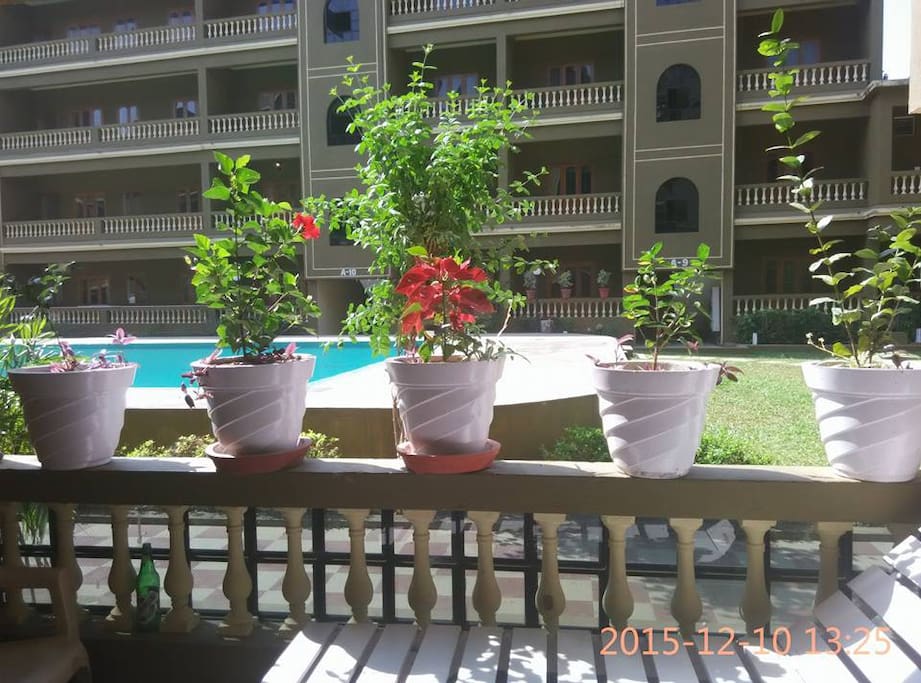
Serene Siolim- Gateway to the pristine beaches of North Goa at Tropical Dreams Resort with Lush green surroundings Ground Floor across the biggest swimming pool in Goa is furnished with SplitAC Ref...
Vacation Rentals in Siolim

Monday, November 8, 2010

Comments by Indian on websites on RADICAL ISLAMISTS

Comments by Indian on websites on RADICAL ISLAMISTS


RADICAL ISLAMISTS, never tolerate other cultures. The mythical state of pakistan wants to associate itself with ARABIA and trace their origin to arabia. Majority of pakistanis say that they are from Arabia, which is utter nonsense, because pakistanis are descendent's of HINDUS ancestors who were ruthlessly converted to islam. It is sad and ironic that the ancestors of those indulging in Jihad were the ones who suffered the worst plunder and pilliage of islam. The ancestors of the radical islamists were the worst sufferers of the terror of islam. Most muslims know this truth deep inside their heart, however they refuse to accept it. This identity crisis is the root cause of the problem. Check the DNA and it will be similar to rest of INDIA and very far away from Arab DNA.

Also please reflect on Balochistan, please reflect on mass murder or Shias, Ahmediyas and Bohras. Why no protests on streets of pakistan about this??? Because majority of pakistanis believe in Nizam-E-Mustafa, Dar-ul-Islam and radical interpretation of SUNNI RADICAL ISLAM.


Anyway, dear Jihadi's please do not attempt to shadow box like eunuchs? Don't indulge in hidden terrorist activities like an eunuch and do harm to our unarmed civilians in my sacred motherland. Please meet us in the battlefield, if you really feel so strongly about Nizam-E-Mustafa and Dar-Ul-Islam, then come and die on the battlefield, instead of propaganda nonsense. Dear Jihadi's we will be merciful to you and deliver you to Heaven, Hell or Whatever/Wherever it might be.

INDIA MUST vanquish RADICAL ISLAM, INDIA does NOT have a choice. Every INDIAN is aware that we were born millions of times before, so sacrificing ONE birth for our beloved motherland is nothing. We know we MUST pay a price to protect our CULTURE and FREEDOM and we are eager to work out our KARMA in the battlefield.

Once again, please learn to live in harmony with ALL religions and nations, otherwise islam will self destruct itself and be wiped out from the face of the earth.

INDIA has awakened and NONE can stop HER.

Look up the lineage of Qaid-E-Azam Mohammad Ali Jinnah on WIKIPEDIA.

"Jinnah's ancestors were Hindu Rajputs who had converted to Islam. Jinnah's family belonged to the Ismaili Khoja branch of Shi'a Islam, though Jinnah later converted to Twelver Khoja Shia Islam"

This is quote from wikipedia Sir.

Not only was he SHIA but his ancestors were Rajputs. It is clearly mentioned, in every single historical evidence of Jinnah.

Also please look up every single historical book before 1940 (i.e. before the many dishonest historians started plying their trade). Every single pre 1940 history will clearly indicate that ancestors of current day subcontinent muslims were HINDUS.

However irony is that even muslim in Kerala will claim he is from Turkey, when he looks nothing like a Turkish person.

Added to this when subcontinent muslims go to Haj to seek blessing of the Great Prophet Mohammad, they are are insulted as "Al Hind, Al Kafir". This is not new phenoman but even Indians who went to Haj before 1940's were insulted with this term "Al Hind, Al Kafir". Hence the Prophets blessings will also be with INDIA and INDIA WILL vanquish Radical Islam.
 

Friday, October 29, 2010

Text of Simla Agreement & War Criminals Published by webmaster

Text of Simla Agreement & War Criminals
Published by webmaster


Simla Agreement on Bilateral Relations between India and Pakistan was signed by Prime Minister Indira Gandhi, and President of Pakistan, Z. A. Bhutto, in Simla on July 2, 1972. The Agreement was ratified on July 28, 1972 and came into force from August 4, 1972.

The Text of the SIMLA AGREEMENT

The Government of India and the Government of Pakistan are resolved that the two countries put an end to the conflict and confrontation that have hitherto marred their relations and work for the promotion of a friendly and harmonious relationship and the establishment of durable peace in the subcontinent so that both countries may henceforth devote their resources and energies to the pressing task of advancing the welfare of their people.

In order to achieve this objective, the Government of India and the Government of Pakistan have agreed as follows:
(i) That the principles and purposes of the Charter of the United Nations shall govern the relations between the two countries.
(ii) That the two countries are resolved to settle their differences by peaceful means through bilateral negotiations or by any other peaceful means mutually agreed upon between them. Pending the final settlement of any of the problems between the two countries, neither side shall unilaterally alter the situation and both shall prevent the organisation, assistance or encouragement of any acts detrimental to the maintenance of peace and harmonious relations.
(iii) That the prerequisite for reconciliation, good neighbourliness and durable peace between them is a commitment by both the countries to peaceful coexistence respect for each other’s territorial integrity and sovereignty and noninterference in each other’s internal affairs, on the basis of equality and mutual benefit.
(iv) That the basic issues and causes of conflict which have bedeviled the relations between the two countries for the last 25 years shall be resolved by peaceful means.
(v) That they shall always respect each other’s national unity, territorial integrity, political independence and sovereign equality.
(vi) That in accordance with the Charter of the United Nations, they will refrain from the threat or use of force against the territorial integrity or political independence of each other.
Both governments will take all steps within their power to prevent hostile propaganda directed against each other. Both countries will encourage the dissemination of such information as would promote the development of friendly relations between them.
In order progressively to restore and normalise relations between the two countries step by step, it was agreed that:
(i) Steps shall be taken to resume communications, postal, telegraphic, sea, land, including border posts, and air links, including over flights.
(ii) Appropriate steps shall be taken to promote travel facilities for the nationals of the other country.
(iii) Trade and cooperation in economic and other agreed fields will be resumed as far as possible.
(iv) Exchange in the fields of science and culture will be promoted.
In this connection delegations from the two countries will meet from time to time to work out the necessary details.
In order to initiate the process of the establishment of durable peace, both the governments agree that:
(i) Indian and Pakistani forces shall be withdrawn to their side of the international border.
(ii) In Jammu and Kashmir, the line of control resulting from the ceasefire of December 17, 1971, shall be respected by both sides without prejudice to the recognised position of either side. Neither side shall seek to alter it unilaterally, irrespective of mutual differences and legal interpretations. Both sides further undertake to refrain from the threat or the use of force in violation of this line.
(iii) The withdrawals shall commence upon entry into force of this agreement and shall be completed within a period of 30 days thereof.
This agreement will be subject to ratification by both countries in accordance with their respective constitutional procedures, and will come into force with effect from the date on which the instruments of ratification are exchanged.
Both governments agree that their respective heads will meet again at a mutually convenient time in the future and that in the meanwhile the representatives of the two sides will meet to discuss further the modalities and arrangements for the establishment of durable peace and normalisation of relations, including the questions of repatriation of prisoners of war and civilian internees, a final settlement of Jammu and Kashmir and the resumption of diplomatic relations.
Source:
The national encyclopedia of Bangladesh Banglapedia records the event as:
Simla Agreement a peace settlement reached between India and Pakistan following the WAR OF LIBERATION of Bangladesh in 1971 which India supported as an ally. The Pakistan army surrendered on 16 December 1971, and the whole army was taken to safety as Prisoners of War. Bangladesh was eager to try them as war criminals. Releasing the prisoners from the Indian custody and keeping them away from the threatened war trial became a grave national issue for the government of Pakistan. On the other hand, India needed to restore normal relations with Pakistan in order to restore its image as a peace loving nation. Pakistan Prime Minister Z.A Bhutto and Indian Prime Minister Mrs Indira Gandhi met in a summit meeting at Simla (28 June-2 July 1972) and signed the peace treaty.

According to the terms of the agreement, India and Pakistan decided to put an end to all hostilities and establish friendly relations between them in all affairs- regional and international and restore the status quo in Jammu and Kashmir as on 17 December 1971. Under this agreement India returned all prisoners of war to Pakistan without holding any trial. India also made a ‘package deal’ with Pakistan, not mentioned in the agreement, under which Pakistan was to accord diplomatic recognition to Bangladesh and open negotiations for mutually exchanging the citizens opting for Bangladesh and Pakistan. [Asha Islam]

Conclusion

A careful reading of the text shows that in the agreement, the signatories Prime minister India Gandhi of India and President Z. A. Bhutto of Pakistan were more concerned for normalizing the bilateral relations of India and Pakistan. There was off-the-record understanding for the diplomatic recognition of Bangladesh by Pakistan. The question of genocide and war crimes is either ignored or neglected and India returned all prisoners of war to Pakistan without holding any trial.

Composed by Dr. M. Razzaque from BUET
Jan 08, 2008
Filed under: War Criminals and Colloborators, 2July-1972Indira Gandhi, Simla Agreement, Zulfikar Ali Bhutto

Thursday, October 28, 2010

Defeating Political Islam by Moorthy S. Muthuswamy


Defeating Political Islam by Moorthy S. Muthuswamy

 
About the Author
Moorthy S. Muthuswamy resides in America. He received a doctoral degree in nuclear physics from Stony Brook University, New York. He has published numerous opinions, articles, and book chapters spanning over ten years.


Editorial Reviews
Review
""[An] excellent analysis of the threat the Islamic ideology poses to the West....not only identifies and analyzes the problem civilized democracies face with Islam, but he also aims to give possible ways to deal with it as well. This book is a must-read for everyone and an eye-opener for those who are not yet aware of the threat Islam poses to our Western civilization...." --Geert Wilders, a member of the Dutch Parliament and the political leader of the Party for Freedom (PVV).

"Defeating Political Islam attacks and destroys the ideas of "war on terror" and a benign Islam that has been high jacked by extremists. He shows that our prime error is ignoring the fact that political Islam exists, that it has a detailed ideology and a history of conquest. If we do not engage in an ideological battle with political Islam, we are doomed to lose a war we refuse to recognize....If I were President, I would direct that every officer and diplomat that dealt with the Middle East and Asia read, study and comprehend Defeating Political Islam." --Bill Warner, Director--Center for the Study of Political Islam

"Here is a thorough and provocative discussion of the threat of the global jihad and Islamic supremacism in all its dimensions. Moorthy Muthuswamy deserves our gratitude for presenting a solidly argued exposition of what must be done in order to fight, and win, this conflict on ideological and political grounds, defending human rights and religious freedom from the threat posed to them by the jihadists. We can only hope that our political leaders and those of all the nations that are threatened by the jihad will heed his wise counsel before it is too late." --Robert Spencer, author of the New York Times Bestsellers The Politically Incorrect Guide to Islam (and the Crusades) and The Truth About Muhammad.

"Defeating Political Islam attacks and destroys the ideas of "war on terror" and a benign Islam that has been high jacked by extremists. He shows that our prime error is ignoring the fact that political Islam exists, that it has a detailed ideology and a history of conquest. If we do not engage in an ideological battle with political Islam, we are doomed to lose a war we refuse to recognize....If I were President, I would direct that every officer and diplomat that dealt with the Middle East and Asia read, study and comprehend Defeating Political Islam." --Bill Warner, Director--Center for the Study of Political Islam

""[An] excellent analysis of the threat the Islamic ideology poses to the West....not only identifies and analyzes the problem civilized democracies face with Islam, but he also aims to give possible ways to deal with it as well. This book is a must-read for everyone and an eye-opener for those who are not yet aware of the threat Islam poses to our Western civilization...." --Geert Wilders, a member of the Dutch Parliament and the political leader of the Party for Freedom (PVV).
Product Description
Al Qaeda and its sympathizers are often viewed as isolated fanatics outside of the mainstream Muslim population outlaws not only in the West but also in respectable Muslim nations. This book argues just the opposite: that in fact terrorism is the logical outgrowth of an international Islamic political agenda that is endorsed and funded by Islam's major players Saudi Arabia, Iran, and Pakistan. Author Moorthy S. Muthuswamy labels these nations the "Axis of Jihad". For decades, he says, they have been devoted to extending their spheres of influence in the name of religion.

Utilizing a recent groundbreaking statistical analysis of Islamic doctrines and an analysis based upon the outlook of Muslims, he discusses the possibility that Islam is less a religion and more an ideology of conquest.

Muthuswamy urges US policymakers to rethink the War on Terror along the lines of the successfully waged Cold War against communism. The nuclear physicist-author makes the following main point:

Like the Cold War, this war is more a contest of ideas than armed conflict. Rather than placing the emphasis on military might and costly wars abroad, the West should invest the bulk of its effort in a science-based ideological war, one that is directed at discrediting the simplistic, conquest-oriented theological roots of Islamist indoctrination and jihadist politics.

Muthuswamy also emphasizes the importance of a largely non-Muslim India in the War on Terror, in view of its location and size. The India-born author gives a fascinating description of modern Islamic conquest in South Asia. His insights into the Islamist siege and subversion of Indian democracy should be revealing for the citizens of western democracies.

The author asserts that the West needs India in dealing with the conundrum that is Pakistan, as they both share language, culture, and more with each other.

This fresh perspective on the ongoing threat from Islamist terrorism offers much to ponder about the future course of US foreign policy initiatives.


This review is from: Defeating Political Islam: The New Cold War (Hardcover)
I purchased this book primarily to learn the views on political Islam and Jihad from a "non-white" European/North American. As the author points out, India has been victimized by Islam perhaps more than any other country on the planet with the exception of Arabia itself. However, unfortunately, all too often during the past several decades or so, Indians have, in the name of political correctness and "non-aligned" movement solidarity stemming from the Nehru/Nasser aliance, white washed the centuries of ethnic cleansing perpetrated on them by Islam, as well as the more recent predations. So, it was quite refreshing to learn that at least some Indians are beginning to re-examine their past so as to better understand the threat to their future. Whether one agrees with the author or not, one should read this book for the sections on India if nothing else.
His primary thesis is that militant Jihad can never be defeated unless the philosophical underpinnings of political Islam are discredited and eliminated. Unfortunately, he points out, that political Islam itself (and ultimately Jihad) can never be eliminated unless the theological underpinnings of Islam itself are discredited and proven to be false. Contrary to what certain intellectually challenged critics claim, he is not advocating the mass extermination of Muslims or any sort of persecution. In fact, he makes the point several times that military responses to Jihad are not the solution, though they may be needed from time to time to gain short term breathing room. Rather, his main point is that the only way to defeat political Islam and subsequently eliminate Jihad, is to
subject the Islamic trinity of Qur'an, Hadith, and Sunna to the same scientific and scholarly scrutiny that Christian doctrines have been subjected to over the last several centuries. Use science, he says, to first convince the westernized, intellectual Muslims of the errors of their religion, and then this will eventually trickle down to the masses in the third world countries. The Western powers could speed this process up by setting up TV and radio stations beamed to the Islamic world where their scriptures would be analyzed by experts and held up against the findings of science. In the process, the numerous contradictions and outright silliness of most of literatures in their holy trinity of Qur'an, Hadith, and Sunna, would become apparent to all leading to a mass defection from the religion. He warns, however, that such an effort would likely unravel Christianity as well as religion in general gets de-mythologized by science.

I wanted to give this book five stars for the author's unique approach to dealing with Political Islam and for his invaluable recounting of the true (and very grave) situation in India. However there were a few issues that prevented me from doing so. One was his tendency to repeat himself rather often. Another issue was his tendency to accept the position of the apologist Steven Swartz that the virulent form of Sunni Islam sweeping the world today is entirely the fault of Saudi Arabia's Wahhabism. In so doing, the author undermines his own thesis that it is Islam itself that needs to be dismantled. By placing all of the blame for virulent Islam and Jihad on the shoulders of the Wahhabis (bad though they are), he is, in a sense, letting the MB and Sayyid Qutb off the hook. Then there is the matter of minor factual errors. For example, on page 69 he makes reference to "the Saudi tribes Muhammad was a part of." Historically, the Saudis did not appear until the 15th century, and then the ruled only one tiny village near Riyadh. They did not become major players until they wedded themselves to the Wahhabi doctrine in the 18th century. So, there were no Saudi tribes during the time of Muhammad. What the author should have said, was Arab tribes. Unfortunately he made that same mistake several times throughout the book, projecting "the Saudis" back into historical times and geographical areas when and where they did not exist.


I would like to thank Mr. Webb for a thoughtful review.

I didn't claim that the virulent form of Sunni Islam sweeping the world today is entirely the fault of Saudi Wahhabism.

In fact, I pointed out the following in discussing the evolution of Indonesia: "My answer to the original question of why Indonesians have now become less moderate is, they listen to and discuss Islamic theology much more now than they did fifty years ago.... the increase in Islamic extremism seen all over the world coincides with the increase in funding for propagating Islamic theology. We can see consistently that more exposure to Islamic theology leads to more extremism - exactly the kind of correlation expected, based upon the statistics we've discussed."

Even in discussing the attributes of Wahhabism itself, I noted: "As new groundbreaking research discussed in the next chapter shows, statistically, jihadist politics form a significant component of Islamic doctrine. Hence, one has to wonder whether the Wahhabi interpretation of Sunni Islam is indeed a fair and accurate representation of Islamic doctrine as defined in the trilogy."

In my effort to identify the roots of many Muslim attributes - from terror to shunning education and modernism - to just one thing: the Islamic doctrine itself, I appear to have come across as repeating myself.


Islamism is a Threat Posing as a Religion

Islamism is a Threat Posing as a Religion

Islamism is a Threat Posing as a Religion

Mervyn F. Bendle
October 28, 2010

http://www.familysecuritymatters.org/publications/id.7769/pub_detail.asp


Tuesday, October 26, 2010

On Partition of India

As per Sukh Lal Dhani- On Partition of India

There are some other aspects as well. which allow a new glimpse of Gandhi's life. They include the following some of which will not be liked by the official historians, for want of directions from above;

1. Gandhi was not an ordinary person like most of us. He belonged to the line of Prime Ministers of a group of states around Rajkot;


2. Prime ministers to Indian states and Residents used to be appointed by the British rulers, who acted as agents of the Empire as again the rulers of Indian states;

3. Only those students were sent to England to study law were generally not promising students and whose parents had enough of money to spare;

4. Most of he colleges in England used to be residential ones, and the degrees were allotted after spending a particulate number of years.


5. Even matriculates could such law degrees;

6. Merit was determined by the British rulers not on the basis of excellence of candidates but it was suited to the deficiency of the candidates;

7. Most of the early Indian students came from about 600 students came from princely states who were taught lesson that "parhoge lkhoge hovoge khraab, kheloge koodoge banoge nawab";


8. When students from ordinary but rich families started going to England for higher studies, and secured better grades than the princes, the merit of princes was upgraded by allotting more marks for sports, extra curricular activities;

9. Gandhi was an average student, he never gave priority to studies, he started spending time in learning dance and leading an easy life and eating meat;

10. Still, he cared for the opinion of his elders, particularly his mother. Therefore he imposed self-discipline and reverted to his early comparatively chaste life;

11. He does not deserve to be give special credit for believing in non-violence since Manusmriti required Vaisyas to remain subservient to Brahmanas and particularly the armed Kshatriyas. His non-violent conduct could not be ascribed to the teachings of the Buddha and Lord Mahaveera;

12. his conduct in South Africa confirmed to the delight of the Brituish rulers that if r the leadership if Indian distrust was entrusted to a man like Gandhi, they could easily rule over India unhindered fro many more decades;

13. When Capital of India was at Calcutta, Tagore family used to be the best recipient of the favors of the British Empire. Rabindra Nath Tagore's grand d father was so rich that he had traveled in his own steamer to England for being in the audience of Queen Victoria;

14.The Tagore estate around Shantiniketan was the health resort of British couples earmarked for merrymaking;


14. After shifting of the Capita to New Delhi in 1912, the role of Tagore was taken over by Motilal Nehru at Allahabad.


15. Motilal Nehru was initially not an advocate but he was only a mukhtiar and in that capacity he had become friendly to one Judge Mullah, who had give his Anand Bhavan to Motilal;

16. Motil al had an excellent rapport with judges in England so that Jawaharlal had the freedom to visit their residences even as a law student;

17. Jawaharlal Nehru was senior to Gandhi in Congress;

18,Gandhi was persuaded by Gopal Krisna Gokhale and Tagore's emissary Andrews by going to South Africa to shift to India and take charge of Politics there;

19. Gandhi was asked by Bal Gangadhar Tilak to remain on probation for quite a few years and get acquainted with rural India and its poverty. BG Tilak was a Congress extremist who wished the British to leave immediately unlike Gokhale, the mentor of Gandhi;

20. Gandhi had come to hold the reigns of Congress in 1921 when he got a resolution passed to the effect that he would remain a life tie dictator of Congress;

21. Thus the writ of Gandhi was honored not because of any special regard for him but because of his being a dictator and his continued friendship with all the Viceroys of India;

22, Gandhi's arrival in India was celebrated by he British rulers by conferring upon him the Kaiser-I hind Award on him on the very next day of his arrival in India for the most outstanding services to the British Empire while being in South Africa;

23. Gandhi had not helped the Boers and Zulus of South Africa in their revolt against British Rulers but he had served to his best the British rulers;

The list can go on and on but at this stage it should suffice to generate the special interest in the unwritten side of history of Indian freedom struggle.


Dr. Dhani

Untold History of India's Partition RANDOR GUY spoke to British historian, ANTONY COPLEY

Untold History of India's Partition

RANDOR GUY spoke to British historian, ANTONY COPLEY

The noted British historian, ANTONY COPLEY, whose areas of specialisation include, Hinduism, Modern Indian History, the life and career of leaders like Mahatma Gandhi, Pandit Nehru, (Rajaji), and Mohammed Ali Jinnah, has been an active India-watcher for years.

A senior member of the Faculty of History in the University of Kent at Canterbury, England since 1967, he has written many books on various aspects of Indian history and culture. Prof. Copley was recently in India on a study tour and RANDOR GUY spoke to him about some events of recent Indian history.
http://www.facebook.com/topic.php?uid=103295562390&topic=19170
Excerpts from the interview.

Many think that the Partition of India in August 1947 could have been averted! Do you think so?

OVER the last 10 years that led to the Partition, there was lot of poor communication, possibly dishonesty and lots of misunderstanding. People were adopting positions, fencing for the future power structure in India and in doing so opportunities were constantly being lost...

When you say, "people", who were they?

The leading representatives of the Congress starting with Pandit Nehru with Gandhi beginning to be marginalised. Sardar Patel was, of course, another key player... On the other side was Jinnah, the outstanding figure of the Muslim League, and the representatives of the British Government, this was the structure. The only last possible moment when the division could have been avoided was in 1946 when the Cabinet Mission came here — Lord Pethick-Lawrence, A. V. Alexander and Sir Stafford Cripps. Those negotiations were the best prospect for any possible all-India settlement. Once the Cabinet Mission proposals had been discarded and the Muslims rejected them, there was no more opportunity.

Why did they reject them?

That was the beginning of a rethinking process by Nehru about the most possible future of independent India. Nehru began to sense that coming to some arrangement with the Muslim League was so off-putting. His experience with the Muslim League representatives in the Interim government cabinet in 1946 made him painfully aware that it was not worth the candle of trying to find some order over the division of power between the two forces. It made much more sense to cut your losses! So he began to move away from such division to reluctant toleration of partition of India. Jinnah too was for a showdown for the partition. The Congress was also scared of the initiative slipping away and getting out of their hands. The radical movements taking over especially the Leftists in Bengal! The biggest factor in the last stage was the readiness in West Bengal for partition. The Bengalis (Hindus) felt marginalised and alienated by the Muslims and were willing to accept a truncated Bengal to restore their prestige.

When you say that Gandhi was marginalised and Pandit Nehru took over, was it deliberately done by him and others or did Gandhi himself contribute to it by his moralistic stance and philosophy?

Nehru was very faithful to Gandhi. It was a painful process of setting aside the peculiar and high values of Gandhi. Once the practicalities of power politics began to be dominant, he realised that an idealist like Gandhi could not be the focus of the power structure. Gandhi said that when India became independent the Congress party should be disbanded and become a social service organisation! Besides he made some extraordinary proposals like Jinnah should become the Prime Minister of India! He even offered it to Jinnah, he never abandoned the idea even in 1947. Meanwhile the Congress moved in another direction.

Was there any lust for power in the Congress leaders at that time?

They were only human...People who had devoted major part of their adult lives in prison felt themselves getting closer to power and the prospects of an independent India seemed much brighter than ever before and they did not want to postpone what they have been seeking for years.

Looking back to 1942, when the Congress rejected the "Cripps Plan", Rajaji came up with his "CR-Plan". He advised the Congress to accept the formation of Pakistan but was violently opposed by the party. Some historians think that if only the Congress had only accepted the CR-Plan, the trauma of Partition in 1947 could well have been avoided. Do you agree?

The CR-Plan anticipated in acute detail what actually happened later in 1947. In a way he paved the way for talks if not a solution. Rajagopalachari largely engineered the Gandhi-Jinnah Talks of 1944. It gave Jinnah much publicity, much propaganda of his cause, much force and increased the chances of formation of Pakistan.
CR was the most brilliant, serious, rational and clever-thinking man India ever produced. Here was a man who could see far ahead but he could not grasp the human frailties in the situation. We now know that Cripps did not have the support of the Home Government in London! Winston Churchill was not for any proposals. And he did not want the Cripps Plan to work. FDR was pressing Churchill that he should do something for India and her demand for freedom. So Churchill knew he had to make some of gesture to the Americans to get them off his back.

So he was trying to please Roosevelt more than anything else?

I think that, as far as Churchill was concerned, it was his perceptual objective that there should be no offer to India for freedom especially in the war situation. Cripps was entirely in a false position. He thought it would work. He did not know that Amery (the Secretary of Sate for India) was hand in glove with Churchill!

There is an interesting incident not known to many. Sir C. P. Ramaswamy Aiyer, then the Dewan of Travancore State, met Sardar Patel in Bombay. Both were on their way to meet Sir Stafford Cripps. Patel told Sir C. P. that nothing would come out of the Cripps Plan. The whole thing was a front engineered by Nehru to become the Prime Minister of India and it would not happen for he (Patel) was putting it down and going to kill it! He had already told Gandhi and he had agreed that it should be done! Sir C. P. was taken aback at this revelation. So he wrote a secret communication to Lord Linlithgow who was equally surprised! He narrated it all in a secret letter to Amery in London, which I read in the " Transfer of Power" Documents.

In 1942 Nehru was genuinely anxious that the Cripps proposals should work, though on Congress terms. He was a genuine democrat — anti-fascist. He was anxious to get the Congress to agree to some arrangement with the Raj, He felt that it would help to avert in the future the partition of India.

Talking of Jinnah, do you think that his role on Indian politics was much bigger than Gandhi's?

In terms of their moral presence Gandhi was by far a greater man. Jinnah had two moments of dominance in the Indian story. One was during the First World War (1914-1918), which the Congress just frittered away. Here was a man who could be a very powerful and useful ally but they alienated him and allowed him to drift into negative relationship with the Congress. And he comes back in 1935 with a new proposition, he has to work extremely hard to build up his position as the all India Muslim leader, and by 1945 he is a key player. But Jinnah was an impossible man to negotiate with.

Was it part of his psyche or a mere put-on?

He was naturally reserved, he had so many human setbacks, his marriage, the importance that Gandhi got from the "Khilafat Movement", he never really recovered from the serious hurt of the series of injuries he had in life. He was a very secretive man, kept his ideas well in control, a loner. I recognise him as master tactician of real politique. You may not like him but you have to recognise his political talents and manoeuvring skills. In the beginning he didn't want Pakistan but some all-India settlement for Muslims. He allowed the Pakistan Movement to become the vehicle to manoeuvre the politics of the Indian sub-continent. It was a case of the means becoming the end. Perhaps the means was Pakistan and the end was the Prime Ministership of India. He very much hoped in 1946 and was shattered when Lord Wavell (then Viceroy of India) didn't allow him and Nehru became the Prime Minister of the Interim Government. Gandhi did invite him to take over but it did not happen. We do not know when the tuberculosis he suffered from became rampant — he kept it a closely guarded secret but he knew he had not long to live. That's why he chose to become the President of Pakistan, and not Prime Minister.

Barak Obama visiting India


Popular Posts

Search This Blog